domingo, junho 12, 2005

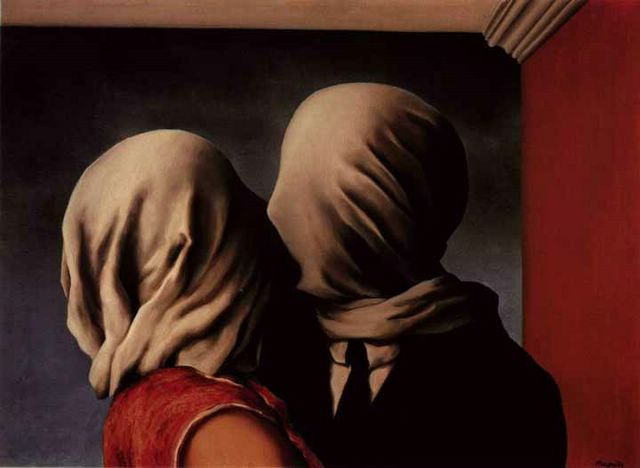
Dia dos Namorados


Orazio Gentileschi, "Cupido e Psiquê" (1628-1630)


Neste dia nacional do Cupido, minha principal tarefa deveria continuar lendo a interessantíssima autobiografia de Gandhi e produzir alguma coisa próxima de um post decente para Os Progressistas. Afinal, não faço parte da trupe que fez a alegria dos comerciantes nos últimos dias e fará a dos moteleiros hoje. Entretanto, não se pode negar que a data, como é típico nas festas comerciais, adquiriu uma notável onipresença. Há mais corações e fotos osculatórias por metro quadrado neste junho de 2005 do que em toda a história do romantismo no século XIX. Também pudera: o amor romântico é um dos grandes temas de nossa cultura. E continua sendo, apesar de o estarmos maltratando cada vez mais. Sinal de uma possível mudança de padrão? Quem sabe... De qualquer forma, não foi surpresa encontrar este artigo de Carla Rodrigues tratando do assunto no site no mínimo.

Mais um livro para a lista...

quinta-feira, junho 09, 2005

Macacos sabem usar dinheiro

The New York TimesJune 5, 2005

Monkey Business

Keith Chen's Monkey Research

Adam Smith, the founder of classical economics, was certain that humankind's knack for monetary exchange belonged to humankind alone. ''Nobody ever saw a dog make a fair and deliberate exchange of one bone for another with another dog,'' he wrote. ''Nobody ever saw one animal by its gestures and natural cries signify to another, this is mine, that yours; I am willing to give this for that.'' But in a clean and spacious laboratory at Yale-New Haven Hospital, seven capuchin monkeys have been taught to use money, and a comparison of capuchin behavior and human behavior will either surprise you very much or not at all, depending on your view of humans.

The capuchin is a New World monkey, brown and cute, the size of a scrawny year-old human baby plus a long tail. ''The capuchin has a small brain, and it's pretty much focused on food and sex,'' says Keith Chen, a Yale economist who, along with Laurie Santos, a psychologist, is exploiting these natural desires -- well, the desire for food at least -- to teach the capuchins to buy grapes, apples and Jell-O. ''You should really think of a capuchin as a bottomless stomach of want,'' Chen says. ''You can feed them marshmallows all day, they'll throw up and then come back for more.''

When most people think of economics, they probably conjure images of inflation charts or currency rates rather than monkeys and marshmallows. But economics is increasingly being recognized as a science whose statistical tools can be put to work on nearly any aspect of modern life. That's because economics is in essence the study of incentives, and how people -- perhaps even monkeys -- respond to those incentives. A quick scan of the current literature reveals that top economists are studying subjects like prostitution, rock 'n' roll, baseball cards and media bias.

Chen proudly calls himself a behavioral economist, a member of a growing subtribe whose research crosses over into psychology, neuroscience and evolutionary biology. He began his monkey work as a Harvard graduate student, in concert with Marc Hauser, a psychologist. The Harvard monkeys were cotton-top tamarins, and the experiments with them concerned altruism. Two monkeys faced each other in adjoining cages, each equipped with a lever that would release a marshmallow into the other monkey's cage. The only way for one monkey to get a marshmallow was for the other monkey to pull its lever. So pulling the lever was to some degree an act of altruism, or at least of strategic cooperation.

The tamarins were fairly cooperative but still showed a healthy amount of self-interest: over repeated encounters with fellow monkeys, the typical tamarin pulled the lever about 40 percent of the time. Then Hauser and Chen heightened the drama. They conditioned one tamarin to always pull the lever (thus creating an altruistic stooge) and another to never pull the lever (thus creating a selfish jerk). The stooge and the jerk were then sent to play the game with the other tamarins. The stooge blithely pulled her lever over and over, never failing to dump a marshmallow into the other monkey's cage. Initially, the other monkeys responded in kind, pulling their own levers 50 percent of the time. But once they figured out that their partner was a pushover (like a parent who buys her kid a toy on every outing whether the kid is a saint or a devil), their rate of reciprocation dropped to 30 percent -- lower than the original average rate. The selfish jerk, meanwhile, was punished even worse. Once her reputation was established, whenever she was led into the experimenting chamber, the other tamarins ''would just go nuts,'' Chen recalls. ''They'd throw their feces at the wall, walk into the corner and sit on their hands, kind of sulk.''


Chen is a hyperverbal, sharp-dressing 29-year-old with spiky hair. The son of Chinese immigrants, he had an itinerant upbringing in the rural Midwest. As a Stanford undergraduate, he was a de facto Marxist before being seduced, quite accidentally, by economics. He may be the only economist conducting monkey experiments, which puts him at slight odds with his psychologist collaborators (who are more interested in behavior itself than in the incentives that produce the behavior) as well as with certain economist colleagues. ''I love interest rates, and I'm willing to talk about their kind of stuff all the time,'' he says, speaking of his fellow economists. ''But I can tell that they're biting their tongues when I tell them what I'm working on.''

It is sometimes unclear, even to Chen himself, exactly what he is working on. When he and Santos, his psychologist collaborator, began to teach the Yale capuchins to use money, he had no pressing research theme. The essential idea was to give a monkey a dollar and see what it did with it. The currency Chen settled on was a silver disc, one inch in diameter, with a hole in the middle -- ''kind of like Chinese money,'' he says. It took several months of rudimentary repetition to teach the monkeys that these tokens were valuable as a means of exchange for a treat and would be similarly valuable the next day. Having gained that understanding, a capuchin would then be presented with 12 tokens on a tray and have to decide how many to surrender for, say, Jell-O cubes versus grapes. This first step allowed each capuchin to reveal its preferences and to grasp the concept of budgeting.

Then Chen introduced price shocks and wealth shocks. If, for instance, the price of Jell-O fell (two cubes instead of one per token), would the capuchin buy more Jell-O and fewer grapes? The capuchins responded rationally to tests like this -- that is, they responded the way most readers of The Times would respond. In economist-speak, the capuchins adhered to the rules of utility maximization and price theory: when the price of something falls, people tend to buy more of it.

Chen next introduced a pair of gambling games and set out to determine which one the monkeys preferred. In the first game, the capuchin was given one grape and, dependent on a coin flip, either retained the original grape or won a bonus grape. In the second game, the capuchin started out owning the bonus grape and, once again dependent on a coin flip, either kept the two grapes or lost one. These two games are in fact the same gamble, with identical odds, but one is framed as a potential win and the other as a potential loss.

How did the capuchins react? They far preferred to take a gamble on the potential gain than the potential loss. This is not what an economics textbook would predict. The laws of economics state that these two gambles, because they represent such small stakes, should be treated equally.

So, does Chen's gambling experiment simply reveal the cognitive limitations of his small-brained subjects? Perhaps not. In similar experiments, it turns out that humans tend to make the same type of irrational decision at a nearly identical rate. Documenting this phenomenon, known as loss aversion, is what helped the psychologist Daniel Kahneman win a Nobel Prize in economics. The data generated by the capuchin monkeys, Chen says, ''make them statistically indistinguishable from most stock-market investors.''

 But do the capuchins actually understand money? Or is Chen simply exploiting their endless appetites to make them perform neat tricks?

Several facts suggest the former. During a recent capuchin experiment that used cucumbers as treats, a research assistant happened to slice the cucumber into discs instead of cubes, as was typical. One capuchin picked up a slice, started to eat it and then ran over to a researcher to see if he could ''buy'' something sweeter with it. To the capuchin, a round slice of cucumber bore enough resemblance to Chen's silver tokens to seem like another piece of currency.

Then there is the stealing. Santos has observed that the monkeys never deliberately save any money, but they do sometimes purloin a token or two during an experiment. All seven monkeys live in a communal main chamber of about 750 cubic feet. For experiments, one capuchin at a time is let into a smaller testing chamber next door. Once, a capuchin in the testing chamber picked up an entire tray of tokens, flung them into the main chamber and then scurried in after them -- a combination jailbreak and bank heist -- which led to a chaotic scene in which the human researchers had to rush into the main chamber and offer food bribes for the tokens, a reinforcement that in effect encouraged more stealing.

Something else happened during that chaotic scene, something that convinced Chen of the monkeys' true grasp of money. Perhaps the most distinguishing characteristic of money, after all, is its fungibility, the fact that it can be used to buy not just food but anything. During the chaos in the monkey cage, Chen saw something out of the corner of his eye that he would later try to play down but in his heart of hearts he knew to be true. What he witnessed was probably the first observed exchange of money for sex in the history of monkeykind. (Further proof that the monkeys truly understood money: the monkey who was paid for sex immediately traded the token in for a grape.)

This is a sensitive subject. The capuchin lab at Yale has been built and maintained to make the monkeys as comfortable as possible, and especially to allow them to carry on in a natural state. The introduction of money was tricky enough; it wouldn't reflect well on anyone involved if the money turned the lab into a brothel. To this end, Chen has taken steps to ensure that future monkey sex at Yale occurs as nature intended it.

But these facts remain: When taught to use money, a group of capuchin monkeys responded quite rationally to simple incentives; responded irrationally to risky gambles; failed to save; stole when they could; used money for food and, on occasion, sex. In other words, they behaved a good bit like the creature that most of Chen's more traditional colleagues study: Homo sapiens.

Stephen J. Dubner and Steven D. Levitt are the authors of ''Freakonomics: A Rogue Economist Explores the Hidden Side of Everything.'' 

Link de origem: http://www.nytimes.com/2005/06/05/magazine/05FREAK.html?pagewanted=print


domingo, junho 05, 2005

Reality show em mosteiro

Tradução feita por Felipe Ortiz e colhida em http://www.wunderblogs.com/alexandrinas/archives/017295.html#more. A notícia original está aqui.


REALITY SHOW EM MOSTEIRO MUDA CINCO VIDAS PARA SEMPRE

Cinco homens, incluindo desde um ateu envolvido no mercado da pornografia até um ex-paramilitar protestante, tiveram suas vidas inesperadamente transformadas naquela que é a última fronteira dos reality shows da TV: um mosteiro.

Mais para Oh Brother! do que para Big Brother, os cinco se submeteram a uma reforma espiritual passando quarenta dias e quarenta noites com monges católicos romanos na Abadia de Worth, em West Sussex.

A experiência, que será exibida na BBC 2 este mês, foi concebida para verificar se a tradição monástica inaugurada por São Bento há mil e quinhentos anos ainda tem alguma relevância para o mundo moderno.

Embora os participantes não fossem solicitados a votar nas expulsões uns dos outros, eles encararam o desafio de viver juntos numa comunidade e de obedecer a um regime disciplinado de trabalho e de oração. No final, o ateu Tony Burke, de 29 anos, tornou-se um crente e abandonou seu emprego de produtor de comerciais para um disque-sexo depois de passar por aquilo que ele descreveu como "uma experiência religiosa".

Gary McCormick, de 36 anos, o ex-membro da Associação de Defesa do Ulster [facção armada protestante da Irlanda do Norte, anti-IRA -- nota do tradutor] que passou uma grande parte de sua juventude na cadeia, começou a derrotar seus demônios interiores.

Peter Gruffydd, um professor aposentado, recobrou a fé que rejeitara em sua juventude; e Nick Buxton, de 37 anos, um bacharel em Cambridge, chegou às raias de virar um padre anglicano.

O quinto "noviço", Anthony Wright, de 32 anos, que trabalha para uma editora jurídica de Londres, começou a resolver seus traumas de infância.

A série em três capítulos chamada The Monastery mostra os cinco se submetendo às regras do mosteiro, com horários estritos de instrução, estudo, oração, reflexão e trabalho. Também são exibidas as suas intensas e freqüentemente dolorosas sessões com seus mentores religiosos, monges designados para guiar cada um deles em suas jornadas espirituais.

No final de uma dessas sessões o Sr. Burke, com voz turvada pela emoção, confessou seus sentimentos numa seqüência para um vídeo-diário. "Eu não queria que isso acontecesse", disse.

"Mas algo me tocou, algo falou muito profundamente comigo. Foi uma experiência religiosa."

"Quando acordei nessa manhã, não acreditava nisso; mas, como estou dizendo para vocês agora, eu acredito. Seja lá o que for, eu acredito nisso."

Os participantes (dos quais nenhum era católico romano) compartilhavam as refeições com os monges, trabalhavam nos jardins e participavam das orações diárias, desde as Matinas de manhã cedo até as Completas [que acontecem à noite, antes de dormir -- nota do tradutor]. Eles também eram obrigados a seguir as regras monásticas de silêncio, obediência e humildade.

No começo, os recém-chegados estavam céticos e a disciplina não foi alcançada facilmente -- dois deles foram repreendidos por terem deixado o mosteiro "à procura de virgens e cigarros".

No final, todos admitiram que a experiência deixara neles um impressão profunda.

O Pe. Cristopher Jamison, o abade, disse que o mosteiro ficou encantado com os resultados.

quinta-feira, junho 02, 2005

Livre-mercado à grega

"Charon, the Ferryman of renown, was cruising slowly along the Styx one pleasant Friday morning not long ago, and as he paddled idly on he chuckled mildly to himself as he thought of the monopoly in ferriage which in the course of years he had managed to build up. "It's a great thing," he said, with a smirk of satisfaction-"it's a great thing to be the go-between between two states of being; to have the exclusive franchise to export and import shades from one state to the other, and withal to have had as clean a record as mine has been. Valuable as is my franchise, I never corrupted a public official in my life, and-"

Here Charon stopped his soliloquy and his boat simultaneously. As he rounded one of the many turns in the river a singular object met his gaze, and one, too, that filled him with misgiving. It was another craft, and that was a thing not to be tolerated. Had he, Charon, owned the exclusive right of way on the Styx all these years to have it disputed here in the closing decade of the Nineteenth Century? Had not he dealt satisfactorily with all, whether it was in the line of ferriage or in the providing of boats for pleasure-trips up the river? Had he not received expressions of satisfaction, indeed, from the most exclusive families of Hades with the very select series of picnics he had given at Charon's Glen Island? No wonder, then, that the queer-looking boat that met his gaze, moored in a shady nook on the dark side of the river, filled him with dismay.

"Blow me for a landlubber if I like that!" he said, in a hardly audible whisper. "And shiver my timbers if I don't find out what she's there for. If anybody thinks he can run an opposition line to mine on this river he's mightily mistaken. If it comes to competition, I can carry shades for nothing and still quaff the B. & G. yellow-label benzine three times a day without experiencing a financial panic. I'll show 'em a thing or two if they attempt to rival me. And what a boat! It looks forall the world like a Florentine barn on a canal-boat."

---------

Gostou? Então conheça John Kendrick Bangs e The House-Boat on the Styx.
.


"1984" em spray?

Um cheiro orwelliano no ar...
----------
Nature: http://www.nature.com/news/2005/050531/full/050531-4.html
Published online: 1 June 2005

Trust in a bottle

Michael Hopkin
Nasal spray makes people more likely to place faith in another person.


Sniff this, and then give me all your money.

© Punchstock
Can you bottle trust? The answer, it seems, is yes. Researchers have produced a potion that, when sniffed, makes people more likely to give their cash to someone to look after. A Swiss-led research team tested their creation on volunteers playing an investment game for real money. When they inhaled the nasal spray, investors were more likely to hand over money to a trustee, knowing that, although they could make a hefty profit, they could also lose everything if the trustee decided not to give any of the money back. The potion's magic ingredient is oxytocin, a chemical that is produced naturally in the brain. Its production is triggered by a range of stimuli, including sex and breastfeeding, and it is known to be important in the formation of social ties, such as mating pairs and parent-offspring bonds. It is perhaps no surprise that the compound has been nicknamed the 'love hormone'. Experts think that oxytocin exerts its range of effects by boosting some social behaviours: it may encourage animals or people to overcome their natural wariness when faced with a risky situation. The theory argues that people only decide to trust each other - when forming a sexual or business relationship, for example - when the brain's oxytocin production is boosted.
Increasing trust may be useful for people with social phobia or autism.

Ernst Fehr
University of Zurich, Switzerland
Love is in the air The researchers, led by Ernst Fehr of the University of Zurich, investigated whether this effect can be produced simply by getting people to inhale oxytocin rather than stimulating them to produce it. Such chemicals, they explain, can easily enter the brain when sniffed. In the game, investors were allotted 12 monetary credits, each worth 40 Swiss centimes (32 US cents), and asked to decide how much to give to the trustee. The participants knew that the investment would be quadrupled, and that the trustee could then decide how much, if any, to hand back. Investors were more willing to part with their cash when they inhaled the potion, Fehr's team reports in Nature1. Of 29 subjects given oxytocin, 13 handed over all of their cash. Only 6 of the 29 subjects given a placebo to sniff invested all 12 of their credits. When the human trustee was replaced with a random number generator the effect disappeared. This shows, the researchers say, that oxytocin specifically boosts social interactions, rather than simply making people more willing to take risks. Business of trust Knowing more about how trust is encouraged could help with everything from business to the treatment of psychological conditions. Damping trust may be useful for people with Williams syndrome, for example, in which patients are overly friendly. "Increasing trust may be useful for people with social phobia or autism," Fehr adds. Oxytocin is "easy and cheap to produce and it is easy to get it in drug stores, at least in Switzerland," Fehr says. So does that mean it could be pumped into the air in department stores by unscrupulous salespeople, turning us all into soft targets? Perhaps, but it seems a trifle extravagant, says Antonio Damasio, a neurologist at the University of Iowa in Iowa City. Modern advertising already uses tricks to get us to trust a brand that probably make us boost our own oxytocin levels. "It lures you in with images of wonderful landscapes or sex, and it probably works in exactly the same way," says Damasio.

References

  1. Kosfeld M., Heinrichs M., Zak P. J., Fischbacher U. & Fehr E. Nature, 435. 673 - 676 (2005). | Article |

domingo, maio 29, 2005

Blogs e links

Todo web log que se preze tem sua lista de recomendações. Este, depois que se transferiu para o Blogger, contentou-se por meses com o rol minimalista que adorna o canto superior esquerdo da tela, pela muito boa razão de que os três links são para sites do autor. Agora, porém, que o Divagações se preza mais e a ressaca da mudança já passou, é hora de novamente compartilhar com os seus leitores o que se tem encontrado de bom Internet afora. Como seria proibitivo enumerar as centenas de “favoritos”, irei me limitar a alguns blogs e sites realmente excepcionais e de interesse mais geral.


Naturalmente, a listagem crescerá com o tempo, e não só aceito como peço sugestões aos meus dez generosos leitores.

Estes são os primeiros:

Blogs

Abrindo parênteses - http://www.abrindoparenteses.weblogger.terra.com.br
Com sensibilidade, argúcia e um texto elegante, Gabbi Mendes fala de cinema, literatura e das pequenas e grandes aventuras do cotidiano.

Alexandrinas - http://www.wunderblogs.com/alexandrinas
Um dos poucos (senão o único dos) Wunderblogs que realmente faz jus à fama do grupo.

Liberal libertário libertino - http://liberallibertariolibertino.blogspot.com
Nas palavras do autor, o jornalista Alexandre Cruz Almeida, este é "um blog sobre rebeldia, contemplação e sacanagem, regado a muita literatura e humor".

Plural - http://plural.motime.com
Criado como uma espécie de autobiografia intelectual de seu autor, Marco Aurélio Antunes, este blog traz, além de textos próprios, um verdadeiro clipping quase diário de textos publicados na Internet sobre política, filosofia e literatura. De bônus, uma lista de links simplesmente espetacular.

Smart Shade of Blue - http://smartshadeofblue.brblog.com/
Um daqueles blogs de primeira linha que trata de praticamente tudo: da última CPI a novas descobertas científicas, passando por infrações de trânsito, curiosidades e receitas de pratos típicos, praticamente qualquer coisa pode ser discutida pelo mais inteligente dos vários matizes de azul...

Velho do Farol - http://velhodofarol.blogspot.com
Um dos freqüentadores mais assíduos do Smart Shade of Blue, Marcus Pessoa fala de atualidades, informática e arte.

Sites

Arts & Letters Daily - http://www.aldaily.com
Se eu tivesse de levar comigo um notebook com acesso a um único site para uma ilha deserta, o link escolhido seria este. Vale muito a pena acompanhar este clipping.

sábado, maio 28, 2005

Da série "Grandes Amores Natimortos" - I

Imperfeições

Eis que tinha apenas um único defeito, porém mortal: não ter defeito algum.

sexta-feira, maio 27, 2005

Máscaras


Quando todas as máscaras caem, ainda resta alguém por detrás delas?

quinta-feira, maio 26, 2005

Extraordinariamente comum

"Conheço tua conduta: não és nem frio nem quente. Oxalá fosses frio ou quente! Assim, porque és morno, nem frio nem quente, estou para te vomitar da minha boca."

Apocalipse, 3:14.


Um processo lento, discreto. Praticamente não se percebe. Começa, até onde se pode rastreá-lo, com uma ou outra opinião emitida durante uma conversa banal. Depois, se não for detido, ele já se alastrou para os pensamentos cotidianos, os julgamentos quanto a pessoas e situações, até sentimentos, com freqüência acima do usual. Quando se vai perceber, já aconteceu... A complexidade de opiniões, o pesar criterioso dos prós e dos contras, o benefício da dúvida, tudo já se foi... Em seu lugar, apenas o senso comum.

É estranhíssimo observar-se sendo superficial...

quinta-feira, maio 19, 2005

Atualizações por e-mail

Para mostrar que o autor destas linhas está sintonizado com os mais recentes avanços do artesanato digital gratuito, a partir de hoje meus pacientes leitores já podem receber no conforto de suas caixas postais um aviso de que há algo novo para ler. Basta preencher o campo à esquerda da tela.

Em suma, nada mais de visitar o blog de hora em hora todos os dias, na ânsia incontrolável por posts erráticos...

(E lá se vai a audiência!)

quarta-feira, maio 18, 2005

Three passions

Three passions have governed my life:
The longings for love, the search for knowledge,
And unbearable pity for the suffering of [humankind].
 
Love brings ecstasy and relieves loneliness.
In the union of love I have seen
In a mystic miniature the prefiguring vision
Of the heavens that saints and poets have imagined.
 
With equal passion I have sought knowledge.
I have wished to understand the hearts of [people].
I have wished to know why the stars shine.
 
Love and knowledge led upwards to the heavens,
But always pity brought me back to earth;
Cries of pain reverberated in my heart
Of children in famine, of victims tortured
And of old people left helpless.
I long to alleviate the evil, but I cannot,
And I too suffer.
 
This has been my life; I found it worth living.
 
 
                        Bertrand Russell (adaptado)
 

sábado, abril 23, 2005

Limites

Primeiro a dor de cabeça. Discreta, a princípio, das que somem sozinhas após alguns minutos. Mas não quis partir, antes foi ficando, e ficando... Logo, a estranha sensação de um areal recém-surgido na garganta lhe fez companhia. Depois, o enfraquecimento da disposição geral, como se a energia habitual estivesse se dissipando. A dor de cabeça agora parece um eco reverberando pelo crânio, acelerando o cansaço físico. Aos poucos, o corpo se ressente da rotina diária e pede repouso mais cedo. A mente parece fazer coro com ele, a custo absorvendo qualquer leitura e fazendo esforço redobrado por um pensamento. Os olhos, exaustos, ameaçam lacrimejar diante de maior concentração. Vêm então os espirros, a tosse e o golpe fatal, a coriza.

O corpo não vai bem. Precisa diminuir o ritmo, encontrar novas forças, realentar-se. Mas não o fará agora. O processo costuma ser lento, gradual, e ainda por alguns dias os sintomas serão um incômodo, eventualmente até um impedimento para certas atividades. Contudo, a mente se rebela. Também cansada, lenta, ela volta seu foco para si mesma e a relativa impotência em que se encontra. Ativa que é no dia-a-dia, cheia, se não propriamente de idéias, pelo menos de fantasias, ela percebe o quão dependente é, prisioneira de uma máquina que não vai bem. A doença avança, toma espaços, vai espalhando suas perturbações pelos vários órgãos e percepções, minando os empreendimentos da mente desconsolada. É difícil criar quando a maior parte da atenção está concentrada no nariz, ou na garganta, ou na testa que parece latejar em ritmo cruel. Ainda assim, ela insiste, procura ignorar os corrimentos, o frio, a dor, o areal, em busca de qualquer coisa que tome sua atenção e a estimule. Quase certamente não virá nenhuma idéia original,mas sempre se pode elaborar com o material já guardado. Ao pensar em alguma atividade, imediatamente registra o protesto do corpo. Ele quer ficar inerte, esperando a recuperação e a cura; ela se recusa a jogar fora seu tempo com tais exigências. Há tanto para se fazer e meditar, e perder tempo com descanso! Não, não é possível. Deixar-se abater por tão pouco! Resistir, é preciso resistir...

Na pouca energia que lhe resta, ela própria se examina e recorda tudo quanto já deixou escapar. Um torvelinho de pequenas memórias se ergue em seu interior, e num lapso ela repassa tudo que poderia ter sido e se esqueceu... As idéias fulgurantes abatidas pela inanição, projetos deixados de lado após os iniciais arroubos de entusiasmo, os poemas de dois versos jamais desenvolvidos, a pintura cuja técnica não se aprendeu, as frases silenciadas, as réplicas brilhantes e tardias, as cobiças tão repetidamente insatisfeitas, as declarações jamais entregues, cartas sinceras escritas apenas com a tinta de intenção e o resultado da fantasia. E, no fundo de tudo, as pilhas de leituras não completadas, ou nem iniciadas, que agora se amontoam em caixas de arquivos e prateleiras já abandonadas; e a noção tristonha, refletida nas fileiras de lombadas familiares, da extensão dos conhecimentos agora esquecidos... Quantos desses fantasmas a rondar os subterrâneos de uma mente em luta com seu próprio hospedeiro? Impossível dizer, seu nome é Legião. E, todavia, cada um desses elementos tão variados — possibilidades de vida e ação — teve o mesmo berço, ao mesmo tempo tão raso e obscuro, de meu próprio ser. Difícil dizer como nascem, menos ainda como vêm à tona. Não obstante, de alguma forma continuam lá, ressurgindo vez por outra em memórias fragmentadas e fugazes, deixando rastros tênues quase nunca seguidos. Do mais radioso lance de inspiração não desenvolvida ao pensamento mais vulgar, todos talvez voltem para seu abismo primordial, a cada dia, em incontáveis horas. Todo um tesouro que se define pela perda, pela falta, pela dissipação. Por aquilo que não pôde ser, nem poderia ter sido.

Após se debater em vão com seus próprios fracassos, é impossível à mente continuar. O mal-estar físico já lhe nubla os pensamentos mais elementares. É preciso recolher-se, e tudo esquecer novamente.

sábado, abril 16, 2005

Apetites

Os apetites são caprichosos. Vêm e vão sem grande lógica, invadem-nos sem pedir licença e, com certa freqüência, vão-se da mesma forma, saciados ou não. Alguns orgulhosos hão de querer dar-lhes uma satisfação póstuma, até exagerada, em compensação à espera que tiveram de suportar enquanto seus apetites lhes estalavam o látego. Que seja. Nem por isso o fenômeno perde em interesse: pois o mesmo indivíduo que num momento se sente bem e auto-suficiente, no outro se aflige por alguma vontade misteriosa que lhe surgiu à cabeça, insistente e sempre a cobrar providências. O objeto é sempre variável, pode ser o mais inocente doce ou a mais arriscada volúpia, mas o processo não muda muito. O desejo é o irmão siamês da razão. Possivelmente o irmão mais forte.

Dentre as incontáveis linhagens dos apetites súbitos, uma me tem sido recorrente de uns tempos para cá. Mais pacífica que a média, é até fonte de prazer — por si mesma, independentemente da saciedade que possa lhe proporcionar. Um paradoxo, sem dúvida, pois a razão fria não distingue muito senso em uma carência agradável, afinal ela é uma lacuna, uma imperfeição momentânea, implica certo grau de sofrimento. Mas o fato está aí, não posso negá-lo. Ele se faz presente a cada vez que a vontade ressurge, que o pensamento se deixa arrastar por esse apetite tão exótico... Refiro-me, naturalmente, à fome de beleza.

Sim, “fome”. Pois não há outra palavra que melhor defina o que tem guiado meus olhos de algum tempo a esta parte. Eles simplesmente têm vagado por pessoas, objetos e lugares em busca do doce pousio que só a simetria de cores e formas confere — aquela sensação adorável que se tem quando fitamos alguma coisa agradável de ver. A seu modo, é uma ponta de felicidade surpreender a beleza, seja qual for a forma que tome. Aliás, forma talvez seja o que menos importe, pois a beleza é sobretudo uma sensação. Ela não reside no objeto da maneira como o senso comum estabelece, “Isto é belo, aquilo não é”. Ela é o primeiro impacto, o deslumbramento, a força misteriosa que faz com que foquemos o olhar em alguma coisa e não mais queiramos desviá-lo. A beleza é justamente o que nos prende nesse momento. Alguns felizardos a encontram por toda parte; outros, mais retraídos, talvez vaidosos, parecem mais exigentes e dizem vê-la apenas em certas condições. Há mesmo quem diga que vê-la sempre é não vê-la jamais. Os filósofos certamente terão escrito algumas dúzias de tratados sobre essa instigante diferença. De minha humilde parte, sei apenas o que sinto, condicionado sabe-se lá por que arremates do coração. E o que sinto é a vontade de mergulhar nessa comoção deliciosa e contemplar sem pudores qualquer coisa que cative os olhos por mais de dois segundos. Olhar, olhar, e, enquanto olho, tentar ver... Pois a beleza tem lá sua audácia: ao mesmo tempo que prende, ela também desafia. Não basta apenas olhar, ela quer ser decifrada. Fitamos um objeto; sentimos a beleza que nos inspira; mas, ao senti-la, também não nos pegamos tentando entender do que ela é feita? Qual o detalhe especial que nos faz distinguir aquele objeto dos demais? O que é o belo ali? Talvez por isso a beleza se caracterize pela demora no olhar, já que precisamos de tempo para matar sua charada. Olhamos, percorremos as linhas, as texturas e cores, voltamos a percorrê-las em seguida, procuramos uma outra forma de organizar esses elementos e, se tudo falha, voltamos prazerosamente ao início do processo. Se não tivermos cuidado, pode se tornar um vício.

Ainda sob o acicate dessa fome visual, perguntei-me mais de uma vez como saciá-la adequadamente. Há beleza de mil formas, mas relativamente poucas permitem uma contemplação mais demorada. As paisagens certamente são as mais favoráveis, mas o corre-corre cotidiano e as obrigações de sempre não facilitam muito que as procure... A beleza humana, essa é particularmente traiçoeira, ao menos quando buscada ao vivo, por razões óbvias. Resta a arte, a eterna companheira dos que têm fome do belo em todas as suas manifestações, dócil e franca, a acolher generosamente os olhos famintos que a vêm visitar.

domingo, abril 03, 2005

João de Deus

E ele se foi. Depois de uma geração, ele se foi. Cresci vendo-o na TV quase toda semana, em capas de bíblias, calendários, escapulários, jornais. Habituei-me à sua voz, à sua batina branca, seu sotaque típico. Lembro-me bem da última vez em que veio ao Brasil, quando centenas de milhares, milhões o saudaram em um Aterro do Flamengo apinhado, em uma impressionante demonstração da força que a fé católica ainda tem nestes tempos de exorcismos televisivos e espiritualidade de shopping center. Embora não mais lhe partilhasse as convicções, tinha-lhe um carinho, uma simpatia pelo homem de branco que corria o mundo atiçando a devoção de tanta gente, encarnando uma tradição milenar que ajudou a moldar nossa civilização. E ele sabia se valer disso, trazendo às pessoas toda a autoridade que sua posição lhe conferia. Mas fazia isso, em geral, de uma forma gentil, simples. Para minha geração, que tem com ele, em sua maioria, alguns pontos de discordância inegociáveis em certas matérias de conduta, ele era, no entanto, o Papa. Não mais um, mas o Papa. Parecia lá desde sempre.
E agora se foi. Relutou, é verdade, e foi longa sua luta com a morte. E agora que ela o levou, ele conseguiu o que parecia impossível -- a mim, que nasci já com ele no Trono de Pedro: fazer com que, por alguns dias, a TV e a mídia em geral abandonassem um pouco suas pautas apelativas e se enchessem de mensagens de fé e veneração, de recolhimento e edificação. E a impressão que me deu, vendo multidões comovidas mundo afora, foi como se, por um momento, o mundo se unificasse em torno do Vaticano, e aquelas mensagens tão simples, que um dia foram a base do império que a Igreja se tornaria, tivessem sido finalmente ouvidas. Por um instante, ao badalar do sinos seculares da Santa Sé, o mundo inteiro converteu-se... E lembrou, ainda inspirado pela estranha coragem de um sacerdote agonizante, de enfim erguer os olhos para o Céu...
E, nesse instante, eu me uni a ele.